Scientists have succeeded in creating
artificial life in a
test tube, in a development which promises to revolutionise
biotechnology.
The research opens the way for scientists to create new life forms that can be genetically programmed to carry out a variety of functions, such as producing carbon-free fuel or made-to-order vaccines and providing new forms of food and clean water. However, the study also raises ethical concerns about the technology falling into the wrong hands, and, for instance, being used to make
biological weapons, or by scientists to "play God" with life.
The research team, led by
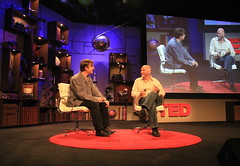
Craig Venter, who previously directed one of the teams which decoded the
human genome, said it had created
synthetic life in the form of a new species of bacteria that operates entirely under the control of a man-made set of genetic instructions, originally stored on a computer. They synthesised the genome of a bacterial cell and used it to "boot up" the empty cell of another species of bacteria, which then replicated freely as if it were carrying its own set of genetic instructions instead of a set made in a laboratory.
"This is the first synthetic cell that's been made, and we call it synthetic because the cell is totally derived from a synthetic chromosome, made with four bottles of chemicals on a chemical synthesiser, starting with information in a computer," Dr Venter said.
"We start with a living cell but the synthetic chromosome totally transforms that living cell to this new synthetic cell," he added.
Dr Venter dreamed of creating artificial life 15 years ago when he led a study that produced the first decoded genome of a microbe. After years of trying to work out the minimal set of
genes necessary for life, and many more years trying to overcome the technical difficulties of constructing an entirely artificial genome, he has finally succeeded in realising his vision.
"This is both a baby step and a giant step. It's a giant step because, until this was done, it was only hypothetical that it could work. It's a baby step in terms of all the distance we have to go before you can buy fuel made from carbon dioxide or have new medicines or new sources of food," Dr Venter said.
"It's a new enabling technology, but it tells you as much about the definition of life as anything else. We consider it a philosophical leap, being able to start with information in the computer, build the chromosome chemically and have it active. That has never been done before. It has changed my definitions of life and how dynamic it is - simply by putting new software into the cell, the cell starts producing the new proteins coded for by that software and creates a new cell. So life is much more dynamic than most people envision and the dynamic process is totally controlled by the software of life, which is the
DNA," said Dr Venter.
And there is more...
http://msn.nzherald.co.nz/world/news/article/cfm?c_id=2&objectid=10646549
Labels: Artificial life, bacteria, Biology, Biotechnology, Craig Venter, DNA, Gene, Synthetic life
 Image via Wikipedia As they may have been...



![Reblog this post [with Zemanta]](http://img.zemanta.com/reblog_e.png?x-id=cc6a020a-e988-4cd3-aff6-c623c914da9d)

